Edward S. Curtis's Most Famous Photographs
Edward S. Curtis (1868–1952) spent three decades on The North American Indian, published between 1907 and 1930 in twenty volumes of text and twenty portfolios holding more than seven hundred large photogravures. A handful of its images are now far better known than the books themselves: a line of riders under the cliffs of Canyon de Chelly, the portrait of the Nez Perce leader Joseph made a year before his death, and the dark procession Curtis titled The Vanishing Race.
These pictures are admired for their beauty and criticized for what they leave out. Curtis posed his sitters, chose their clothing and props, and sometimes erased signs of modern life, all in the service of an idea, that Native nations were disappearing, which history has proved wrong. Each page below explains how one photograph was made, who and where it shows, why it became famous and how it has been questioned, and identifies exactly which print or frame this archive holds from the Library of Congress.
-
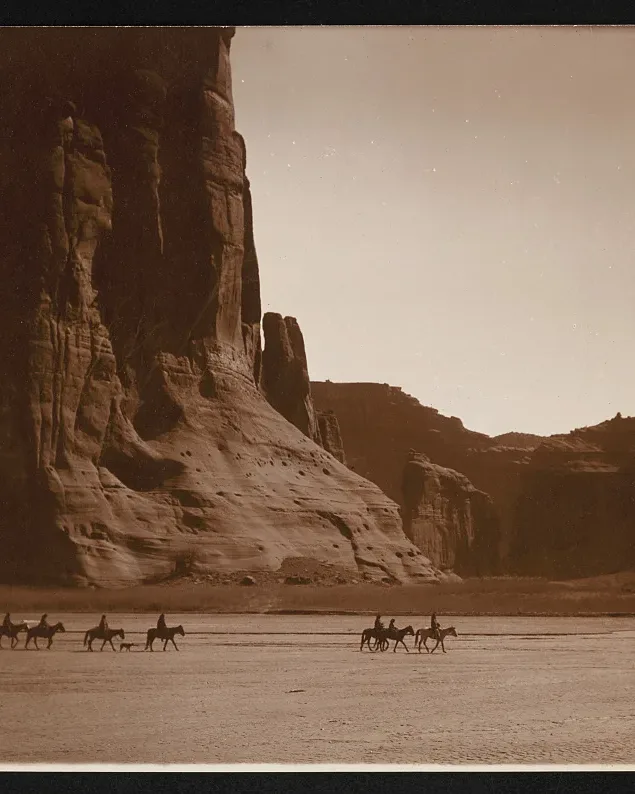
Cañon de Chelly—Navaho (1904)
Seven riders on horseback, followed by a dog, cross the sandy floor of Canyon de Chelly in northeastern Arizona while a sheer sandstone wall rises above them. Copyrighted by Edward S. Curtis in 1904 and published as plate 28 in the first portfolio of The North American Indian, it is one of the most reproduced photographs he ever made. This archive holds the Library of Congress's copyright-era print.
The story behind it → -
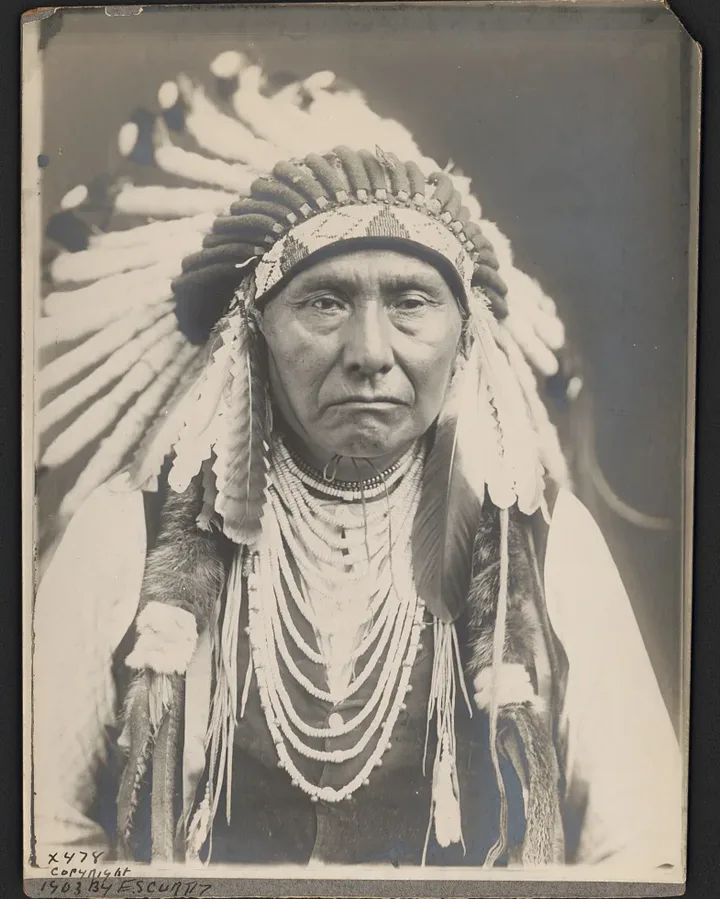
Joseph—Nez Percé (1903)
In November 1903 the Nez Perce leader Joseph, then about sixty-three and living in exile on the Colville Reservation, visited Seattle to plead for his people's return to the Wallowa Valley, and Edward S. Curtis photographed him in his studio. Joseph died the next year. This archive holds two of the resulting portraits: a print of Joseph in a feathered war bonnet and the bareheaded photogravure published as plate 256 of The North American Indian.
The story behind it → -
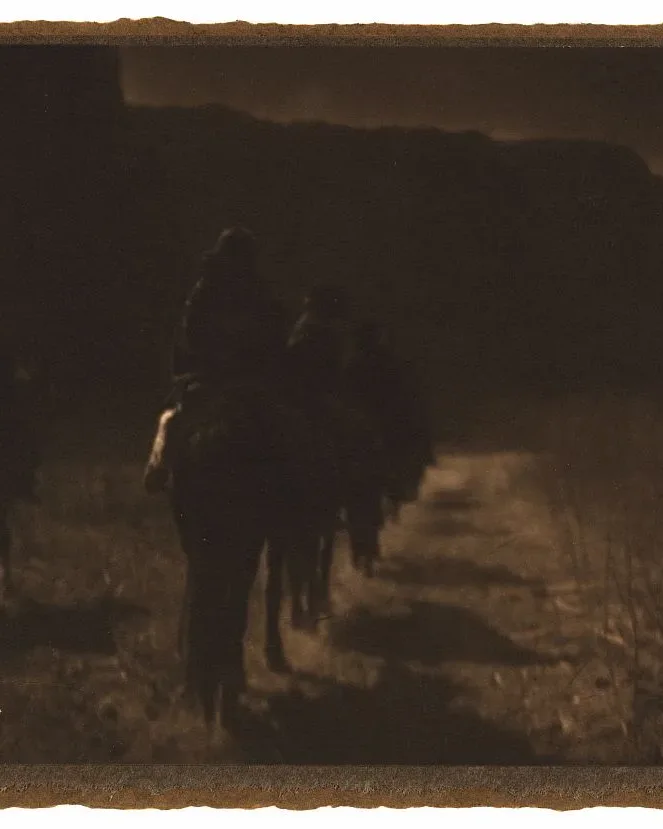
The Vanishing Race—Navaho (1904)
A line of Navajo riders moves away from the camera into a dark canyon, one of them turning to look back. Curtis copyrighted the photograph in 1904 and chose it as plate 1 of The North American Indian because, he wrote, it expressed the thought behind the whole work: that Native peoples were passing into an unknown future. It is his most quoted image and the clearest statement of the idea historians now call the myth of the vanishing race. This archive holds both a platinum print and the published photogravure.
The story behind it → -
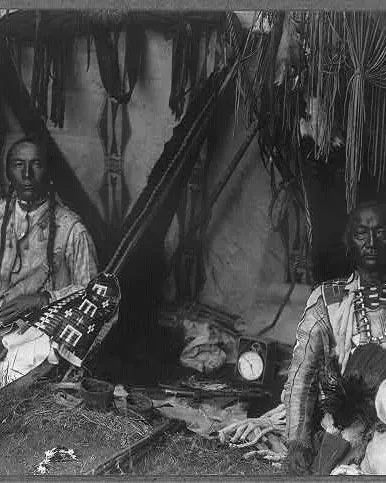
In a Piegan Lodge (1910)
Little Plume and his son Yellow Kidney, Piegan (Blackfeet) men in Montana, sit on either side of a lodge interior with a pipe between them. When the picture was published as plate 188 of The North American Indian, a small clock on the ground between them had been removed, and the alteration has become the best-known example of Curtis editing modern life out of his pictures. Both prints in this archive are unretouched and still show the clock.
The story behind it → -
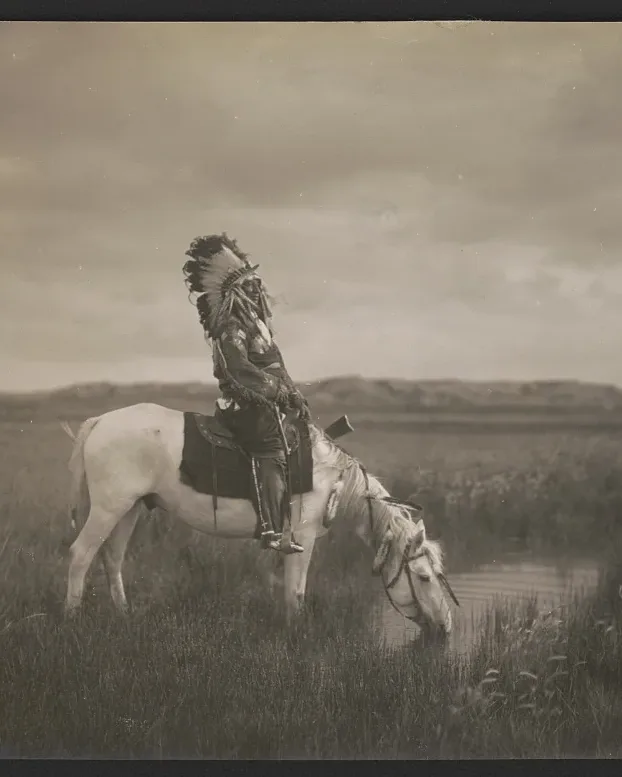
An Oasis in the Bad Lands (1905)
The Oglala Lakota sub-chief Red Hawk, in a feathered war bonnet, sits on a pale horse as it drinks from a small pool in the Badlands. Copyrighted by Edward S. Curtis in 1905 and published as plate 80 of The North American Indian, it is one of his most admired images of the northern plains. This archive holds the Library of Congress gelatin silver print.
The story behind it →